
How does a CO2 laser vaporize skin layers?
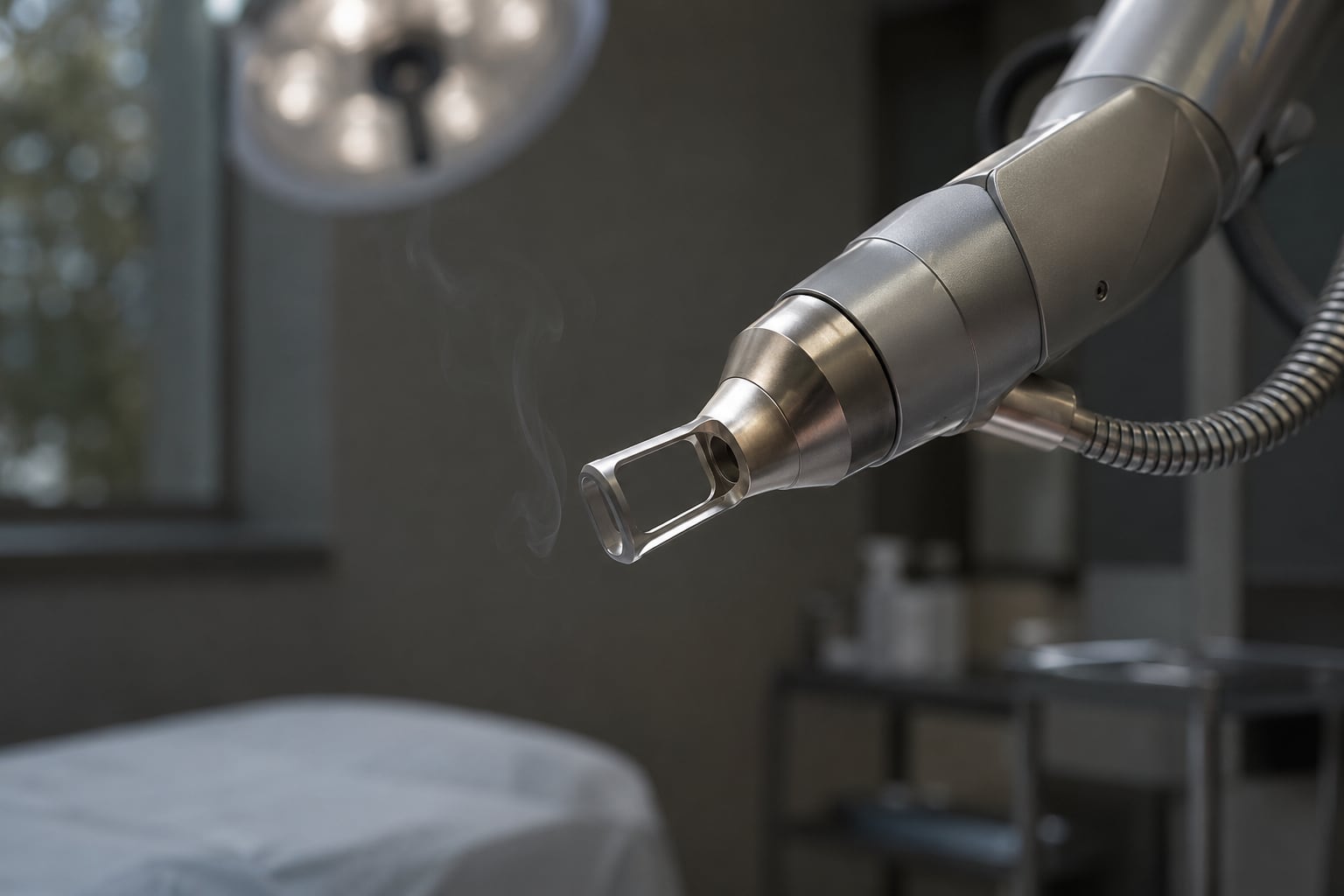
The mechanism comes before the booking. This page lays out what a CO2 laser does to skin, in order, for readers in Dexter, Michigan.
Step one: the layers are removed
According to my.clevelandclinic.org, laser skin resurfacing removes skin very precisely, layer-by-layer by vaporizing it. my.clevelandclinic.org also says lasers remove the outer layer of your skin, the epidermis, and heat the underlying layer, called the dermis.
Two actions happen in sequence: removal at the surface, then heat below it.
Where this sits in your preparation
Knowing the mechanism helps you read a provider's plan. Carbon dioxide is one laser type among several. Cleveland Clinic's page on carbon dioxide laser resurfacing covers this one, and a retrospective study of fractional carbon dioxide laser versus microneedling fractional radiofrequency for acne scars shows it set against another method. For other lasers, see a study of ablative and non-ablative fractional erbium lasers for photoaging and an evidence-based review of nonablative fractional laser resurfacing in skin of color.
What to gather
- The laser type your provider proposes.
- Your questions about which layer the treatment reaches.
- The two statements above, to compare with the provider's explanation.
The next step
Once the mechanism is clear, ask whether the treatment tightens loose skin, which is the next question in the sequence.